
The term ‘girl boss’ holds an air of condescension for some. I get that, the qualification of ‘boss’ as if it had nothing to do with the feminine. We’ve driven phrases like ‘woman doctor’ out of the lexicon, and good riddance. No one raises an eyebrow when a judge, astronaut or CEO turns out to be female (remember those ‘Alex is short for Alexandra’ jokes in the 80s? No? You’re welcome.). As we close out Q1 of the 21st century, we find the air has turned sour around the phrase ‘girl boss’. While I see how we got here, I’d like to make a case for embracing the term—not as a patriarchal pat on the head, but a certified source of power.
As a member of Generation X, my childhood marinated in the shoulder pads and power dressing of Serious Women. Sisters were doin’ it for themselves according to Annie and Aretha, and there was no crying in baseball. If you wanted a man to take you seriously, you had to drink, smoke, swear and shock like a man. B words abounded for the modern woman—words that around here, to quote Joan Crawford, are only used in kennels. And don’t get me started on sexual harassment.
Daily disrespect of personal space went with the job, and if you complained you were too weak to ‘play with the boys’. Men didn’t have to keep their hands, eyes, or thoughts to themselves because you were in ‘their’ territory. If you didn’t like it, you had to find a man who felt like feeding you.
Thankfully there’s more accountability now than 35 years ago. But in the midst of these uphill, unfair and brutal pathways to success, women were taught to despise their femininity. The more brutish a woman was, the more serious she seemed to be. We believed it was the only way to get a foothold in the workplace. Women had to sacrifice softness, vulnerability and all displays of emotion or be dismissed as weak. Then came a little thing called the Internet…
By the early 2000s, women were exhausted. We asked ourselves what it really meant to have it all. Did we want to stay home and let our husbands handle that work stuff? Assuming, of course, that we had a husband who didn’t use his position as breadwinner to make us miserable. Was the open hostility of men in virtually every field of labor worth achieving our career goals? Were we spitting on the women before us for not GI Jane-ing our way into some male-dominated arena? Enter the internet, with its rendering of brick-and-mortar businesses nearly obsolete. It brought us things like Etsy, cupcake culture, and social media. Suddenly you didn’t need to step into Thunderdome to call yourself a businessperson. You could build a business in your own home—one that actually paid your bills and a few other people’s.
This caused a shift in workplace culture. The option to take your wares online removed the trolls lurking under the corporate ladder–or least gave us the option to block them. As time went on, collaboration proved its merit where competition once ruled. Rest and breaks challenged the hustle mentality. Instead of ‘I’ll sleep when I’m dead’, we saw the ugly side of burnout. Studies showed certain habits that strengthened the male body were damaging to the female. Women, finding themselves without families or a life outside the office, stopped padding their shoulders. They dialed down the aggression and dared to wear pink. When the cute 26-year-old walked in, she wasn’t there to pour coffee, but to give the presentation. Women were not in the workplace because they were bored or looking for a husband, but to establish their reputation and have a meaningful impact on the community.
Many women also work to cover family expenses. Most 2-adult households require two incomes to make ends meet, so the economy can’t afford to tolerate work environments that are hostile to women. Suddenly the boss who made everyone cry was less a brilliant leader than the reason for high turnover. The use of intuition, the desire to nurture, and the ability to multi-task proved to be marketable skills, and women who didn’t get their needs met went into consulting or self-employment. It became obvious that the mark of success was somewhere other than the top. In fact, ‘the top’ became something else altogether.
One of my favorite quotes is by John Waters–“True success is figuring out your life and career so you never have to be around jerks.” As a woman who spent her 20’s and 30’s resentful of her femininity, I had a lot to unpack when I re-embraced it. I found that my low self-esteem was tied to denigrating my emotional needs. Wanting men’s approval led me to agree when they put down all things feminine—only for me to be left behind when it came time to pair off. The very men who sneered at femininity chose women who were swimming in it. I learned that the reason men talk trash about femininity is because they’re afraid of its power. And the fact that it’s a power they don’t have access to.
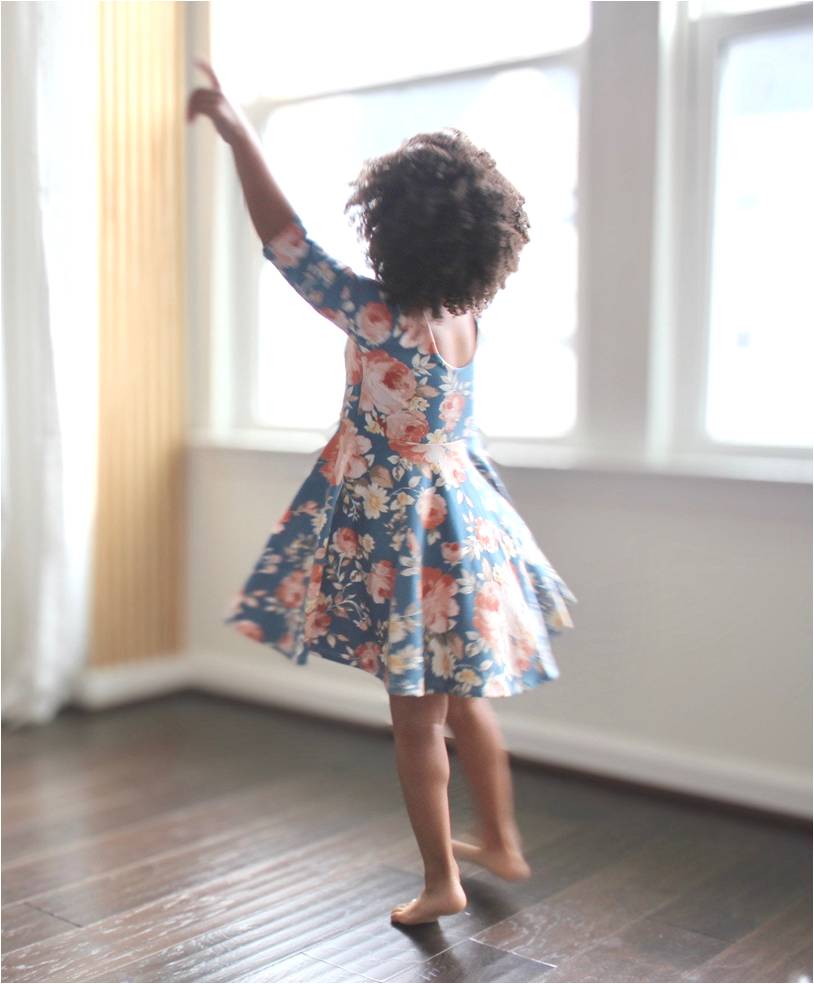
Once that sank in, I steered clear of anyone who mocked or belittled the feminine—and yes that shrank my circle of friends. But it also re-introduced me to the girl I was, the one who loved to twirl in her dresses, who fiercely loved her baby dolls and braided flowers in her friends’ hair. The girl who played in the mud and ran at a break-neck speed around the playground. The girl who beat the boys at tether-ball because she was good, not because she ‘played like a boy’.
So no, I don’t mind the phrase ‘girl boss’. Every time I hear it I remember the girl I was, and how happy she is to have finally caught up with me. Sure we’ve had to deal with disappointments. But whenever I’m down on myself, she finds my twirliest skirt and we have a great, girly time.
 JOYE JOHNSON - Politely Refusing the Kool-Aid